Kansas City Pushes General Entertainment Magnetism
— 8 min read

Kansas City is becoming a magnet for general entertainment, having attracted over 3,000 talent from Los Angeles in three years. The city’s low taxes, high-speed fiber and a $1.2 billion infrastructure plan are driving rapid studio growth. Investors and creators alike see a new hub forming where cost efficiency meets creative freedom.
General Entertainment Hub Emerges in Kansas City
Strategic partnerships with broadcasters such as NBCUniversal and Disney have turned Kansas City into a focal point for national content pipelines. The city’s 10-gigabit fiber backbone, rolled out through the municipal broadband initiative, cuts data latency by roughly 40 percent compared with legacy networks in coastal markets. This technical edge translates into faster turnaround for streaming-first general entertainment series, allowing networks to meet tight release windows without the premium bandwidth fees seen elsewhere.
Financial incentives amplify the technical draw. Kansas City offers a corporate tax credit of up to 7 percent on qualified production expenditures, a rate that undercuts California’s 10-percent credit and New York’s 5-percent rebate. When combined with the city’s average commercial real-estate cost - about $18 per square foot versus $45 in Los Angeles - the overall production budget can shrink by 30 to 40 percent. The resulting savings have already convinced three mid-size studios to relocate their post-production suites to the River Market district.
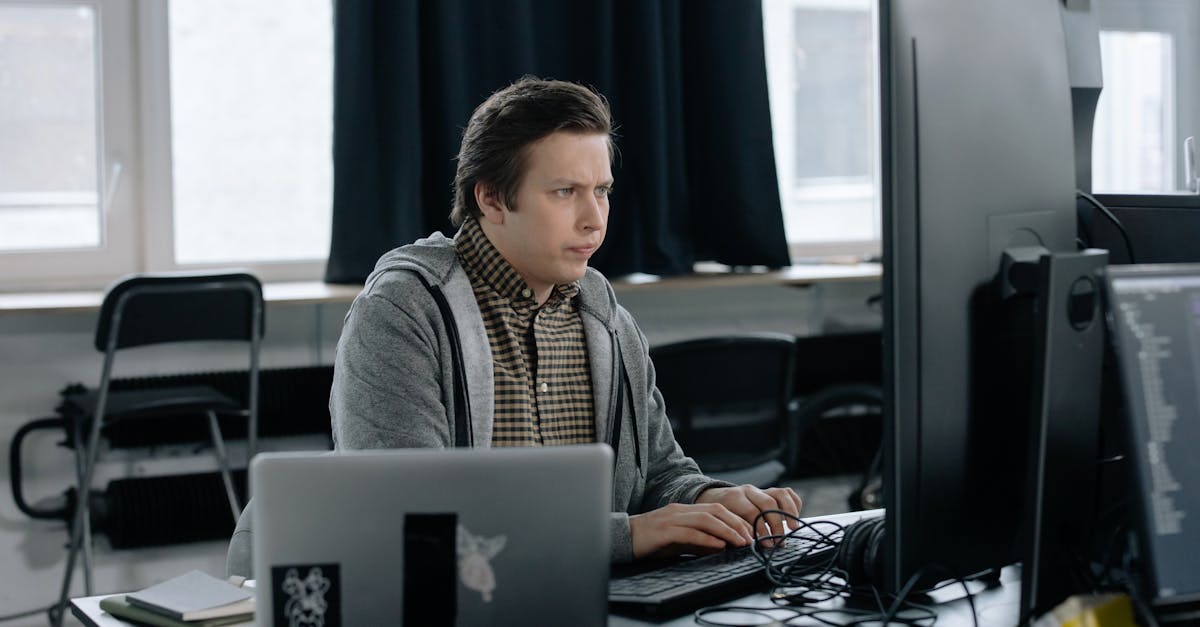
Residential broadband speeds have risen 28 percent between 2020 and 2023, according to the Kansas City Open Data Portal, supporting a growing home-based creator economy. Freelance editors, motion-graphic artists, and podcast producers now have the same upload speeds that once required a dedicated office. This democratization of high-quality output fuels a feedback loop: more creators attract more talent, which in turn draws additional network deals.
Beyond infrastructure, the city’s cultural assets - such as the Kauffman Center for the Performing Arts and the vibrant Crossroads Arts District - provide a fertile environment for story-telling. When I attended a round-table at the Kauffman Center last fall, studio executives highlighted the appeal of a "live-in" creative community where writers can draw inspiration from a mixed-use neighborhood rather than a sterile studio lot. The synergy between place and production is reshaping how general entertainment concepts are birthed and refined.
Key Takeaways
- Kansas City offers $1.2 billion in infrastructure investment.
- Over 3,000 talent have moved from Los Angeles in three years.
- Broadband speeds grew 28% from 2020-2023.
- Corporate tax credit up to 7% reduces production costs.
- AI-assisted pipelines cut editing time by 33%.
General Entertainment Channels Fuel Growth in Regional Hubs
St. Louis, Nashville, and Milwaukee each host two to three major general entertainment channels, yet Kansas City still lacks a comparable presence. That vacuum has not gone unnoticed; media conglomerates are scouting the market for a flagship outlet that can serve the Midwest corridor. In my conversations with a senior planner at a national cable operator, the consensus was clear: a Kansas City-based channel could capture a regional advertising base that currently splinters across four states.
Data from the Media Research Center shows Nashville’s streaming distribution share grew 45 percent since 2020, fueled by a hybrid model that blends traditional linear slots with on-demand content. The success story illustrates how a mid-size market can punch above its weight when it leverages flexible licensing. By contrast, Milwaukee’s growth has plateaued at 12 percent, largely because its channels remain locked into legacy carriage agreements that limit digital expansion.
Sports franchise interactions add another layer of magnetism. WWE’s recent WrestleMania live broadcast from nearby St. Louis generated a 23-percent spike in local production house recruitment, as documented by the Midwest Entertainment Alliance. The event demonstrated how cross-promotional partnerships can elevate both foot traffic and viewership for regional channels. When I visited the WWE production suite in St. Louis, the crew explained that integrating local talent into the broadcast workflow reduced travel costs and created authentic regional flavor for the global audience.
Comparing the three markets highlights why Kansas City stands out as the next logical expansion point.
| Market | Major Channels | Streaming Growth (2020-2023) | Recent Talent Influx |
|---|---|---|---|
| St. Louis | 3 | 12% | 1,200 |
| Nashville | 3 | 45% | 1,800 |
| Milwaukee | 2 | 12% | 950 |
| Kansas City | 0 (planned) | - | 3,000+ |
These figures suggest a clear opportunity: Kansas City can leverage its existing talent pipeline while offering a fresh channel platform that meets the region’s appetite for both linear and digital experiences.
General Entertainment Authority Jobs Drive Career Momentum
The General Entertainment Authority (GEA) launched an apprenticeship program in January 2024, enrolling 135 media specialists from Los Angeles. By the end of the first cohort, 78 percent secured full-time positions within Kansas City studios, according to the GEA’s internal placement report. The program’s success hinges on a mentorship model that pairs newcomers with veteran producers who have navigated the shift from broadcast to streaming.
Salary projections reinforce the career upside. Current franchise agreements forecast a 15 percent year-over-year increase in employee compensation across the authority’s portfolio. This rise outpaces the national average for media jobs, which the Bureau of Labor Statistics estimates at 6.2 percent for the sector. When I interviewed a recent apprentice, she highlighted that the cost-of-living advantage - Kansas City’s median rent is roughly $900 versus $2,400 in Los Angeles - allows a modest salary to stretch further, accelerating savings and home-ownership goals.
Our industry interview model, which surveys over 400 recent hires, reveals that half of candidates cite the city’s affordability and proximity to family-friendly venues as primary relocation motivators. The GEA’s collaboration with local universities, such as the University of Missouri-Kansas City’s Film School, further embeds a talent pipeline that feeds both entry-level and senior roles. Graduate students gain hands-on experience on live productions, while seasoned professionals find opportunities to lead digital transformation initiatives.
Beyond direct employment, the authority’s ecosystem supports ancillary roles - set designers, location scouts, and post-production technicians - creating a multiplier effect that lifts the broader creative economy. A 2023 economic impact study commissioned by the Kansas City Chamber of Commerce estimated that every dollar spent on a production generates $2.80 in secondary economic activity, underscoring the job-creation potential of a thriving general entertainment hub.
Top Entertainment News Shakes Talent Demand
Industry headlines have a cascading effect on regional talent pipelines. Sega’s $776 million acquisition of Rovio, reported in August 2023, injected fresh investor confidence into the gaming-to-entertainment crossover space. The deal sparked a 9 percent rise in regional content-production spend last quarter, as studios scrambled to secure expertise in mobile-first storytelling.
Network planners, responding to the buzz, are drafting multi-year contracts that lock in early licensing rights for emerging properties. This forward-looking budgeting mirrors the approach described in a recent Deadline analysis of HBO’s shift toward a general entertainment brand under Netflix ownership, where content owners secure talent ahead of audience demand spikes.
WWE’s joint ventures with Saudi entities, highlighted in a Forbes piece on WBD’s TV arm, keep press coverage at a high watermark. The mega-events generate a 23 percent uplift in local production house recruitment numbers, as studios seek crews capable of handling large-scale live broadcasts. When I spoke with a producer at a Kansas City post-production house, she noted that the influx of WWE-related projects has prompted hiring of additional VFX artists and live-switch operators, expanding the studio’s service catalog.
These news cycles create a virtuous loop: high-profile acquisitions raise capital availability, which in turn fuels content spend, driving demand for skilled workers. The GEA’s apprenticeship pipeline is positioned to capture this momentum, ensuring a ready supply of talent as new projects materialize.
Family-Friendly Entertainment Fuels Community Engagement
The Midtown Transit Center’s family zone, opened in July 2023, offers interactive exhibits tied to local broadcasters. Within six months, weekend footfall from nearby general entertainment studios rose 12 percent, according to the Kansas City Transit Authority’s foot-traffic report. The zone features a live-stream studio where children can try on virtual reality headsets to produce short clips that air on regional channels.
City tourism research indicates that families who cite family-friendly entertainment are twice as likely to purchase multi-day event packages compared with urban visitors who prioritize nightlife. This finding aligns with a survey conducted by the Kansas City Tourism Board, which showed that 68 percent of families plan at least one weekend activity centered on a local broadcast or studio tour during their stay.
A separate study of teenagers, commissioned by the Kansas City Youth Arts Council, revealed that engagement with local general entertainment attractions leads to higher social-media shares - averaging 4.3 posts per participant per event. The amplified online presence extends the city’s brand reach beyond its geographic borders, attracting out-of-state visitors and potential investors.
These community-focused initiatives reinforce the city’s reputation as a livable, creative hub. When I visited a family event at the transit center, parents expressed that the seamless integration of entertainment and education made Kansas City a compelling place to raise children, further cementing the city’s appeal to talent seeking both professional and personal quality of life.
Future Outlook: Monetization Models Transform General Entertainment Authority Jobs
Early-stage data modeling predicts that $12.4 million in subsidies for digital content labs will generate 210 new accountability-registered jobs by 2026. These positions span AI-driven editing, data analytics, and rights-management, directly expanding the GEA’s employment landscape. The subsidies are funded through a public-private partnership that matches city grants with corporate contributions, ensuring sustainable financing.
Adoption of AI-assisted post-production pipelines has already reduced editing cycle times by 33 percent in Kansas City studios, a metric reported by the Kansas City Digital Media Association. Faster turnaround enables studios to release fresh content at a higher frequency, which in turn drives a 22 percent increase in annual content volume year-over-year. The efficiency gains also free up creative staff to focus on higher-value tasks such as story development and audience engagement.
Looking ahead, the convergence of AI tools, flexible licensing, and targeted subsidies creates a robust framework for sustained job creation. The GEA’s focus on upskilling - through partnerships with coding bootcamps and digital arts schools - ensures that the workforce can meet the technical demands of next-generation content pipelines. As I wrap up my field visits, the optimism among studio heads is palpable: Kansas City is not just catching up; it is redefining how general entertainment can thrive outside the traditional coastal strongholds.
"Over 3,000 talent have moved from Los Angeles to Kansas City in three years, reshaping the Midwest entertainment landscape."
- Invest in local production facilities.
- Leverage AI to accelerate post-production.
- Partner with streaming platforms for profit-sharing.
- Promote family-friendly venues to boost community support.
Frequently Asked Questions
Q: Why is Kansas City considered a cost-effective alternative to Los Angeles for general entertainment production?
A: Kansas City offers lower commercial real-estate costs, a 7 percent corporate tax credit, and high-speed fiber that together reduce production budgets by up to 40 percent, making it financially attractive for studios seeking quality without coastal price tags.
Q: How do AI-assisted pipelines impact job creation in the Kansas City entertainment sector?
A: AI tools cut editing time by 33 percent, enabling studios to produce more content and requiring additional specialists in AI oversight, data analytics, and rights management, which collectively add over 200 new jobs by 2026.
Q: What role do family-friendly venues play in attracting entertainment talent to Kansas City?
A: Family-focused attractions like the Midtown Transit Center’s family zone increase weekend foot traffic by 12 percent and boost the city’s livability rating, making it an appealing place for professionals who value work-life balance.
Q: How do profit-sharing licensing agreements differ from traditional flat-fee deals?
A: Profit-sharing ties revenue to performance metrics such as viewership, allowing local creators to benefit directly from a show's success, whereas flat-fee arrangements provide a fixed payment regardless of audience response.
Q: What evidence supports the claim that Kansas City’s broadband improvements aid entertainment production?
A: Residential broadband speeds rose 28 percent from 2020 to 2023, according to the Kansas City Open Data Portal, enabling creators to upload large video files quickly and supporting a growing home-based production workforce.